Introduction
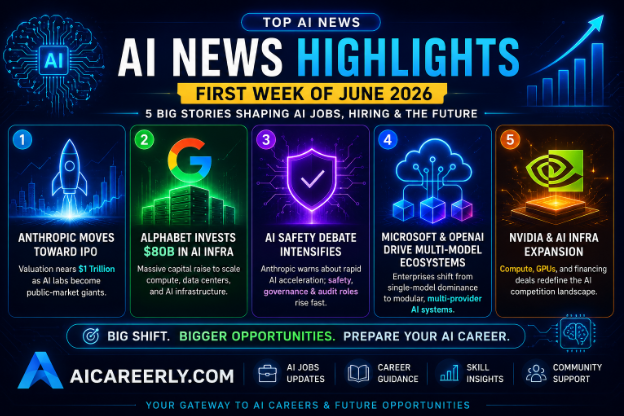
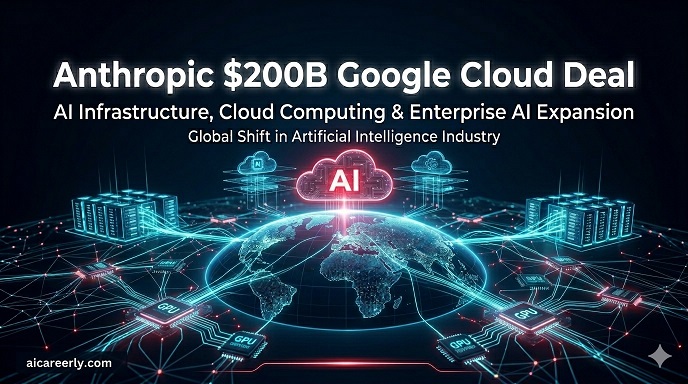
The global race to dominate artificial intelligence is entering a new phase, and infrastructure is becoming the defining battleground. Reports that Anthropic could commit as much as $200 billion to Google Cloud infrastructure over several years have sent shockwaves across the artificial intelligence industry.
The scale of the reported agreement highlights how rapidly AI development is shifting from software innovation to massive compute expansion. As AI models grow more advanced, companies are investing heavily in cloud AI investment, GPUs, and data center capacity to remain competitive.
For the broader tech industry, this is more than a cloud partnership. It is a signal that AI infrastructure may become one of the most valuable sectors in the global economy.
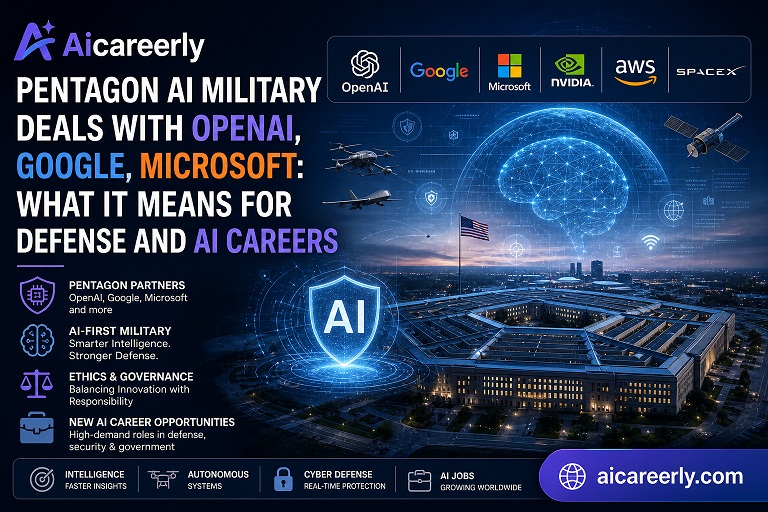
Pentagon AI Military Deals With OpenAI, Google, Microsoft: What It Means for Defense and AI Careers
What Happened?
According to recent reports, Anthropic is expected to dramatically expand its partnership with Google Cloud through a long-term infrastructure commitment reportedly worth up to $200 billion.
The agreement would provide Anthropic with access to Google’s growing AI cloud computing ecosystem, including advanced TPU infrastructure, data center resources, and large-scale compute capacity needed to train and deploy next-generation AI models.
The reported Anthropic Google Cloud deal reflects a larger trend emerging across the artificial intelligence industry. AI companies are no longer competing only through model quality. They are now competing through access to compute power.
As generative AI systems become increasingly complex, infrastructure requirements have exploded. Training frontier AI systems now demands enormous clusters of GPUs, specialized AI chips, cooling systems, and energy-intensive data centers.
At the same time, competition among cloud providers is intensifying. Google, Microsoft, and Amazon are aggressively expanding their AI cloud offerings as they battle for dominance in enterprise AI services.
Why This Deal Matters
1. The AI Infrastructure Race Is Accelerating
The reported commitment underscores the growing importance of AI infrastructure in modern technology development.
Large AI companies now require:
- Massive compute clusters
- Advanced AI chips
- High-speed networking
- Specialized cloud environments
- Reliable long-term infrastructure partners
Without large-scale infrastructure, developing cutting-edge AI models becomes nearly impossible.
2. GPUs and TPUs Are Becoming Strategic Assets
Demand for GPUs and TPUs continues to surge as companies race to scale AI systems.
NVIDIA remains dominant in GPU supply, while Google has invested heavily in its Tensor Processing Units (TPUs) to compete in AI cloud computing. Access to these chips is becoming a major competitive advantage.
This growing demand is also contributing to higher infrastructure spending across the tech sector.
3. Enterprise AI Adoption Is Expanding
The Anthropic Google Cloud deal also reflects growing enterprise AI demand.
Businesses are increasingly integrating AI into:
- Customer support
- Financial analysis
- Software development
- Healthcare systems
- Marketing automation
- Cybersecurity operations
As enterprise AI adoption grows, cloud providers are becoming critical infrastructure partners for AI companies.
4. Competition Among AI Giants Is Intensifying
The agreement further intensifies competition between major technology players, including:
- Microsoft
- OpenAI
- Amazon
- Anthropic
Microsoft continues strengthening its OpenAI partnership, while Amazon has invested heavily in Anthropic. Google’s expanding relationship with Anthropic positions it more aggressively in the AI infrastructure market.
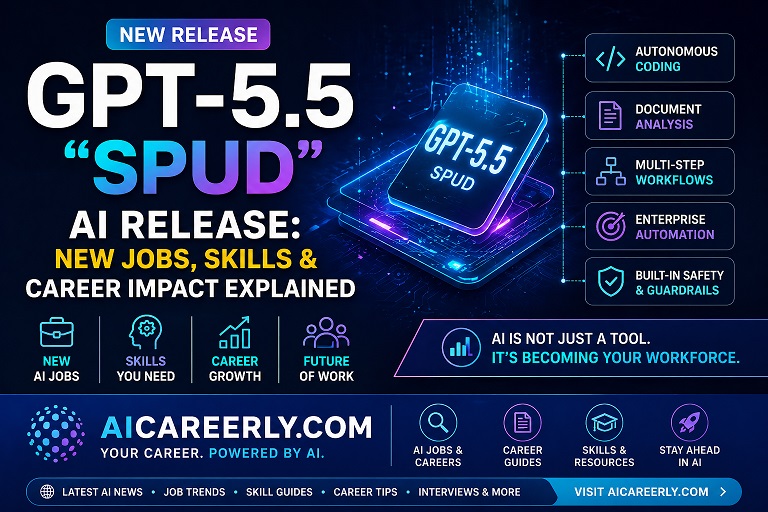
GPT-5.5 “Spud” AI Release: New Jobs, Skills & Career Impact Explained
Impact on AI Jobs and Careers
The rapid growth of AI infrastructure spending is expected to create major opportunities across the technology workforce.
1. AI Engineers
Demand for AI engineers continues to rise as companies scale generative AI products and enterprise AI platforms.
2. Cloud Architects
Organizations increasingly need cloud architects capable of designing large-scale AI cloud computing systems.
3. AI Infrastructure Specialists
Infrastructure optimization, GPU orchestration, and AI deployment engineering are becoming highly specialized career paths.
4. Data Center Engineers
The expansion of AI infrastructure requires advanced data center operations, cooling systems, and hardware management expertise.
5. Machine Learning Engineers
Machine learning engineers remain central to training, optimizing, and deploying advanced AI systems at scale.
6. AI Security Professionals
As enterprise AI adoption grows, security risks surrounding data protection and AI misuse are also increasing. This is driving demand for AI-focused cybersecurity professionals.
The continued expansion of cloud AI investment could make infrastructure-related AI jobs some of the highest-paying roles in the technology industry over the next decade.
Google Commits $185B to AI Infrastructure as Cloud Competition Intensifies
Industry Analysis
1. Compute Power Is Now Central to AI Development
Modern AI systems require enormous computational resources. Training advanced large language models can cost hundreds of millions of dollars in compute alone. This shift means that access to infrastructure is becoming just as important as algorithmic innovation.
Companies with stronger infrastructure partnerships gain several advantages:
- Faster model training
- Better scalability
- Lower operational bottlenecks
- Greater enterprise reliability
As a result, cloud partnerships are becoming strategic necessities rather than optional business relationships.
2. Infrastructure Spending Is Reshaping Tech Priorities
The artificial intelligence industry is now investing heavily in:
- Data centers
- Semiconductor supply chains
- AI chip manufacturing
- Energy infrastructure
- Cloud optimization systems
This spending wave is reshaping how technology companies allocate capital and plan long-term growth strategies.
3. AI Firms Are Prioritizing Long-Term Cloud Partnerships
AI companies increasingly need predictable compute access over many years.
Long-term infrastructure agreements help reduce uncertainty around hardware shortages, pricing volatility, and scaling limitations.
The reported Anthropic Google Cloud deal illustrates how cloud providers are becoming foundational partners in the AI ecosystem rather than simple service vendors.
AI Chip Market Boom 2026: Jobs, Growth & AI Infrastructure Surge
Expert Insight Section
One of the most important developments in the AI market is the growing separation between companies that can access large-scale compute infrastructure and those that cannot. Smaller startups may continue innovating rapidly, but access to affordable compute is becoming a major barrier to scaling advanced AI systems. This could lead to a market where only companies with strong cloud partnerships can compete at the frontier level of AI development. At the same time, enterprise customers are increasingly prioritizing reliability, compliance, and scalability. That trend favors cloud providers capable of delivering stable AI infrastructure at global scale.
Future Outlook
1. AI Startups May Depend More on Cloud Partnerships
As training costs rise, startups may rely heavily on partnerships with major cloud providers to remain competitive.
2. Enterprise AI Will Continue Expanding
More businesses are expected to adopt AI-driven workflows across operations, finance, customer service, and software development.
3. AI Models Will Become Even Larger
Future AI systems will likely require significantly greater compute resources, increasing demand for cloud AI investment.
4. Infrastructure Spending Could Surge Further
The AI infrastructure race is still in its early stages. Additional multibillion-dollar infrastructure deals across the artificial intelligence industry are likely over the coming years.
Conclusion
Anthropic’s reported $200 billion commitment to Google Cloud represents a major turning point for AI infrastructure and enterprise AI development.
The agreement highlights how critical compute power has become in the race to build advanced AI systems. It also signals a future where cloud partnerships, AI chips, and infrastructure investments may define which companies lead the next era of artificial intelligence.
For businesses, investors, and technology professionals, the message is becoming increasingly clear: the future of AI will be built on infrastructure at unprecedented scale.
Frequently Asked Questions (FAQs)
1. What is the Anthropic Google Cloud deal about?
The reported deal involves Anthropic potentially committing up to $200 billion toward Google Cloud infrastructure over several years. The partnership is expected to support large-scale AI model training, cloud computing resources, and advanced AI infrastructure expansion.
2. Why is AI infrastructure becoming so important?
AI infrastructure is critical because advanced AI systems require massive computing power, high-performance chips, data centers, and cloud networking to train and operate efficiently. Without strong infrastructure, scaling modern AI models becomes extremely difficult.
3. How does this deal affect the AI industry?
The agreement could intensify competition among major AI companies and cloud providers. It also reinforces the growing importance of AI cloud computing, enterprise AI services, and long-term infrastructure investments.
4. What role does Google Cloud play in artificial intelligence?
Google Cloud provides AI companies with cloud computing services, TPU infrastructure, storage systems, networking, and scalable environments needed to develop and deploy AI applications at enterprise scale.
5. What are TPUs and why are they important?
TPUs, or Tensor Processing Units, are specialized AI chips developed by Google to accelerate machine learning workloads. They help AI companies process large amounts of data faster and more efficiently than traditional hardware.
6. Could this investment create new AI jobs?
Yes. Growing AI infrastructure investments could increase demand for AI engineers, cloud architects, machine learning engineers, data center specialists, and AI security professionals across the technology industry.
7. How does this impact enterprise AI adoption?
The deal could strengthen enterprise AI adoption by improving access to scalable cloud infrastructure, faster AI deployment systems, and more reliable enterprise-grade AI services for businesses worldwide.
8. Why are cloud partnerships important for AI companies?
Cloud partnerships provide AI companies with access to expensive computing resources, advanced chips, large-scale storage, and global infrastructure that would otherwise cost billions to build independently.
9. Will smaller AI startups struggle to compete?
Some smaller startups may face challenges because advanced AI development increasingly depends on access to expensive compute infrastructure. This could make partnerships with major cloud providers more important for startup growth.
10. What does this mean for the future of AI development?
The deal signals that future AI progress will depend heavily on infrastructure scale, cloud investment, and compute power. Companies with stronger infrastructure capabilities may gain a major advantage in the next phase of AI innovation.