Searching for jobs online can feel exhausting. Many professionals spend hours scrolling through listings, rewriting resumes, and applying to roles that never respond. As competition increases across remote, tech, and international hiring markets, manual job searching is becoming less efficient.
This is where AI job match tools are changing the process. Instead of searching endlessly, modern AI-powered platforms can automatically recommend relevant jobs based on your skills, experience, preferences, and career goals.
From resume analysis to automated job discovery, AI job matching systems are helping job seekers save time and focus on better opportunities. In this guide, you’ll learn how AI job search tools work, which platforms are leading in 2026, and how to use them strategically to improve your chances of getting interviews faster.
Top AI Tools to Find Jobs Faster in 2026 (Complete Guide for Job Seekers)
What Are AI Job Match Tools?
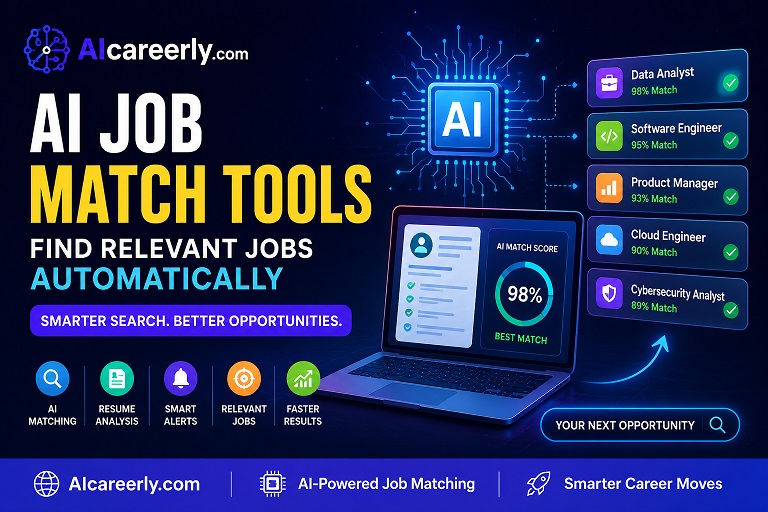
AI job match tools are platforms that use artificial intelligence to connect job seekers with relevant job openings automatically. Unlike traditional job boards where users manually search using keywords, AI-powered systems analyze multiple factors such as:
- Resume content
- Skills and certifications
- Work history
- Industry experience
- Location preferences
- Salary expectations
- Remote work preferences
These systems then compare your profile against thousands of job descriptions to identify strong matches.
Traditional job boards often rely heavily on exact keyword searches. In contrast, smart job matching platforms use machine learning and semantic analysis to understand context and transferable skills.
For example, an AI system may recognize that someone with “data visualization” experience could also qualify for business intelligence or analytics positions, even if the wording differs.
Free Cover Letter Templates That Actually Get Interviews (2026 Guide)
How AI Job Matching Works
Most AI recruitment platforms follow a similar process behind the scenes.
1. Resume Parsing
The system scans and extracts information from your resume, including:
- Job titles
- Skills
- Education
- Certifications
- Years of experience
This process converts resumes into structured data that AI models can analyze efficiently.
2. Skills Extraction
AI systems identify technical and soft skills from resumes and online profiles.
For example:
- Python
- Project management
- Cloud computing
- Communication
- SQL
- Leadership
Some platforms also infer hidden skills based on previous roles and projects.
3. Keyword and Context Analysis
Modern AI job finder tools no longer rely only on exact keywords. They use semantic matching to understand meaning and context.
This means:
- “Software engineer” may match “backend developer”
- “Customer success” may align with “client relationship management”
- “Machine learning” experience may qualify for broader AI positions
4. Machine Learning Recommendations
As users interact with platforms, AI models learn preferences over time.
If you consistently apply for remote cybersecurity jobs, the system may prioritize similar openings in future recommendations.
5. Behavioral Analysis
Some AI career tools analyze:
- Application history
- Click behavior
- Saved jobs
- Preferred industries
- Response rates
This helps improve personalized job recommendations.
How to Use AI to Optimize Your CV for ATS (2026 Guide)
Key Benefits of AI Job Match Tools
1. Saves Significant Time
One of the biggest advantages is automation. Instead of manually checking dozens of websites daily, AI tools continuously scan listings and deliver relevant opportunities automatically.
2. Better Personalization
AI-powered recommendations are usually more targeted than generic job board searches. This reduces irrelevant applications and improves efficiency.
3. Faster Discovery of Hidden Opportunities
Some AI recruitment platforms identify jobs users might not have searched for manually, especially adjacent or transferable roles.
4. Improved Remote and International Matching
AI tools are particularly useful for:
- Remote workers
- International applicants
- Career changers
- Freelancers
Many platforms now filter opportunities based on visa sponsorship, remote eligibility, and global hiring trends.
4. Continuous Alerts and Automation
Automated job alerts help users respond faster to newly posted opportunities, which can improve application visibility.
Best AI Job Match Tools in 2026
Several AI job search tools now dominate the online hiring ecosystem. Each serves different types of job seekers.
1. Aicareerly
Aicareerly is an AI-powered job discovery and career insights platform that helps users explore relevant AI, tech, remote, and visa-sponsored job opportunities more efficiently.
Best for: Job seekers targeting AI, tech, remote, and international visa-sponsored roles.
Pros:
- AI-powered job discovery and smart filtering
- Curated AI and tech job listings
- Dedicated remote job opportunities
- Visa-sponsored job filters for international applicants
- Career insights and job market trends
- Fast, structured job browsing experience
Limitations:
- No direct applicant–job matching or resume-based scoring yet
- Advanced personalization and AI matching features are still in development
2. LinkedIn AI Recommendations
LinkedIn uses AI to recommend jobs based on profile activity, connections, skills, and recruiter behavior.
Best for: Professionals building long-term careers and networking.
Pros:
- Massive recruiter presence
- Personalized recommendations
- Strong networking integration
Limitations:
- High competition
- Some recommendations can be broad
Pricing: Free with optional premium plans.
3. Indeed Smart Matching
Indeed uses AI matching to connect candidates with relevant openings based on resumes and search history.
Best for: General job seekers across industries.
Pros:
- Large job database
- Easy resume uploads
- Strong location filtering
Limitations:
- Quality varies across listings
Pricing: Mostly free.
4. ZipRecruiter AI Matching
ZipRecruiter focuses heavily on automated employer-candidate matching.
Best for: Fast applications and automated outreach.
Pros:
- Quick matching system
- Employer notifications
- User-friendly interface
Limitations:
- Some industries are more represented than others
Pricing: Free for job seekers.
5. Teal
Teal combines job tracking, resume optimization, and AI-powered matching.
Best for: Organized job seekers managing multiple applications.
Pros:
- Excellent application tracking
- Resume optimization tools
- Career planning features
Limitations:
- Advanced tools require paid plans
6. Jobscan
Jobscan focuses on ATS optimization and keyword alignment.
Best for: Improving resume compatibility with automated screening systems.
Pros:
- Strong ATS analysis
- Resume scoring
- Keyword recommendations
Limitations:
- Less focused on direct job discovery
7. LazyApply
LazyApply automates repetitive job applications across multiple platforms.
Best for: High-volume applications.
Pros:
- Saves time
- Automation features
- Browser integration
Limitations:
- Blind automation may reduce application quality
8. Simplify
Simplify helps streamline job applications and autofill forms efficiently.
Best for: Students and early-career professionals.
Pros:
- Fast application workflows
- Internship-friendly
- Good UI experience
Limitations:
- Limited advanced customization
9. Huntr
Huntr combines AI-assisted job search with application management.
Best for: Job seekers managing complex searches.
Pros:
- Visual job pipeline
- AI assistance
- Useful tracking tools
Limitations:
- Some features locked behind subscriptions
Best AI Resume Builders in 2026 (Tested & Ranked)
How to Improve Your AI Job Match Score
1. Use Relevant Keywords Naturally
Include important industry terms throughout your resume, but avoid stuffing keywords unnaturally.
Focus on:
- Skills
- Tools
- Certifications
- Technologies
- Industry terminology
2. Add Measurable Achievements
Instead of vague descriptions, use metrics where possible.
Example:
- “Increased website traffic by 40%”
- “Managed cloud infrastructure for 200+ users”
AI systems often identify quantified achievements as strong indicators of impact.
3. Keep LinkedIn Updated
Many AI recruitment platforms integrate with LinkedIn profiles. Outdated information can reduce matching accuracy.
Update:
- Skills
- Experience
- Certifications
- Portfolio links
4. Tailor Profiles to Target Roles
A generic profile reduces relevance scores.
If targeting:
- AI engineering
- Data science
- Product management
- Cybersecurity
Make sure your resume reflects those priorities clearly.
5. Include Modern Skills
Emerging skills can improve discoverability, especially in technology industries.
Examples include:
- AI literacy
- Cloud computing
- Automation tools
- Data analytics
- Prompt engineering
Best AI Resume Templates for 2026 (Free + ATS-Friendly Downloads)
Common Mistakes Job Seekers Make
1. Overusing Keywords
Keyword stuffing can make resumes unreadable and may trigger spam-like patterns.
2. Using Generic Resumes
A one-size-fits-all resume often performs poorly in AI job matching systems.
3. Ignoring ATS Formatting
Complex layouts, graphics, and unusual formatting can confuse resume parsers.
Use:
- Clear headings
- Standard fonts
- Simple formatting
4. Applying Blindly Through Automation
Automated job search tools save time, but mass-applying without reviewing jobs can hurt application quality.
5. Ignoring Human Review
AI recommendations are useful, but they are not perfect. Always evaluate job relevance manually before applying.
Are AI Job Match Tools Worth Using?
For many professionals, yes. AI tools can significantly improve efficiency, especially for:
- Busy professionals
- International applicants
- Remote workers
- Career changers
- Recent graduates
However, AI should not replace strategic networking and relationship building.
Recruiters still value:
- Referrals
- Personal branding
- Communication skills
- Industry connections
The best strategy combines automation with intentional career planning.
Future of AI-Powered Job Searching
AI recruitment platforms are evolving rapidly. Future trends may include:
1. AI Career Agents
Digital assistants capable of managing job searches autonomously.
2. Personalized Career Copilots
AI systems that recommend career paths, certifications, and skill development plans.
3. Predictive Career Recommendations
Platforms may soon predict future-demand skills and suggest career pivots early.
4. AI Interview Preparation
Integrated interview coaching and simulated interview practice are becoming more common.
5. Skill-Gap Analysis
Some platforms already identify missing skills between candidates and target jobs, then recommend learning resources.
Conclusion
AI job match tools are transforming how professionals discover opportunities online. Instead of spending countless hours manually searching job boards, job seekers can now use AI-powered systems to automate discovery, improve resume matching, and receive more personalized recommendations.
Still, successful job searching requires balance. AI tools work best when combined with strong resumes, networking, strategic applications, and ongoing skill development.
As AI recruitment platforms continue evolving, professionals who learn how to use these tools effectively will likely gain a major advantage in competitive hiring markets.
Frequently Asked Questionss
1. What are the best AI job match tools in 2026?
Popular options include LinkedIn, Indeed, ZipRecruiter, Teal, Jobscan, Simplify, Huntr, and LazyApply.
2. Are AI job match tools accurate?
They can be highly useful, but results vary depending on profile quality, resume optimization, and platform algorithms.
3. Can AI help find remote jobs?
Yes. Many AI job search tools specialize in remote and international job matching.
4. Do recruiters use AI matching systems?
Yes. Many companies use ATS and AI recruitment platforms to filter and rank candidates.
5. Are AI job search tools free?
Many platforms offer free versions, though advanced features often require subscriptions.
6. How can I improve ATS compatibility?
Use simple formatting, relevant keywords, and clearly structured resumes.
7. Are AI job tools better than traditional job boards?
They are often more personalized, but traditional networking still remains important.
8. Which AI tools are best for fresh graduates?
Simplify, LinkedIn, and Teal are useful for entry-level candidates and internship searches.
9. Can AI optimize resumes automatically?
Some tools can recommend keyword improvements and formatting changes for better ATS performance.
10. Is automated job searching safe?
Generally yes, but users should avoid sharing sensitive information on unverified platforms.