On a cold Monday morning in January 2026, Daniel sat staring at his laptop, refreshing job listings for the hundredth time. Marketing degree. Two internships. Dozens of applications sent. Zero replies. Out of frustration, he clicked on a random job posting titled: “Junior AI Content Analyst – No Experience Required.” He laughed.
“AI? That’s for engineers,” he muttered. Still, curiosity got the better of him. He opened the requirements:
“Basic understanding of AI tools like ChatGPT, ability to analyze data, willingness to learn.”
That was it. Three months later, Daniel landed his first AI-powered role, not because he became a programmer overnight, but because he followed a clear, focused roadmap. This guide is that roadmap. If you’re a job seeker in 2026, learning AI is no longer optional. It’s the fastest way to increase your earning potential, stand out in competitive job markets, and future-proof your career.
Let’s break it down step by step.
.
Why Learning AI in 2026 Is a Career Game-Changer
Artificial Intelligence is no longer a niche field. It’s now embedded in almost every industry – from finance and healthcare to marketing and customer support. According to industry reports from organizations like the World Economic Forum, AI-related skills are among the fastest-growing in demand globally, with millions of roles requiring at least basic AI literacy.
But here’s the key insight most people miss: You don’t need to become a machine learning engineer to benefit from AI.
Instead, companies are actively hiring:
- AI-savvy marketers
- Data-aware business analysts
- AI-assisted content creators
- Prompt engineers
- Automation specialists
In other words, AI is becoming a skill layer on top of existing careers.
.
Step 1: Understand What AI Really Is (Without Getting Overwhelmed)
Before diving into tools or coding, you need a simple mental model of AI.
At its core, AI is about machines performing tasks that typically require human intelligence — such as writing, analyzing data, recognizing patterns, or making decisions.
In 2026, the most important branches for beginners are:
- Generative AI (tools that create content, like text, images, and code)
- Machine Learning (ML) (systems that learn from data)
- Automation AI (tools that streamline workflows)
For job seekers, Generative AI is the easiest and fastest entry point.
Start by understanding how AI tools work, not just how to use them.
For example:
- Why do AI tools sometimes give wrong answers?
- What is a “prompt”?
- How does training data affect output?
A solid conceptual understanding will make you stand out more than someone who just clicks buttons.
How to Use AI to Get a Job Faster in 2026
.
Step 2: Learn to Use AI Tools (Your Fastest Entry Into the Industry)
This is where your transformation begins.
Instead of starting with theory-heavy courses, begin with practical tools used in real jobs.
Focus on mastering:
- AI chat tools for writing and research
- AI image tools for design
- AI productivity tools for workflow automation
Start with platforms like:
- Chatgpt (for writing, brainstorming, coding help)
- Midjourney (for image generation)
- Notion.so (for productivity and organization)
Don’t just use them casually — learn them strategically.
For example:
- Practice writing high-quality prompts
- Test different outputs and refine results
- Use AI to solve real problems (resume writing, job search, etc.)
Employers don’t care if you “know AI.” They care if you can use AI to deliver results.
.
Step 3: Pick a Career Direction (Avoid the Biggest Beginner Mistake)
One of the most common mistakes beginners make is trying to learn everything. That leads to confusion, burnout, and zero progress. Instead, choose one AI-enhanced career path early.
Here are high-demand AI career paths for job seekers in 2026:
1. AI for Content & Marketing
- AI copywriting
- SEO content creation
- Social media automation
2. AI for Business & Data
- Data analysis with AI
- Business intelligence
- Reporting automation
3. AI for Tech (Beginner-Friendly)
- Prompt engineering
- AI testing
- No-code AI development
4. AI for Freelancing
- AI-powered services (writing, design, automation)
- Fiverr/Upwork AI gigs
Once you pick a direction, everything becomes easier. Your learning becomes focused. Your portfolio becomes relevant. Your job applications become stronger.
How to Use AI to Prepare for Job Interviews in 2026 (Step-by-Step Guide)
.
Step 4: Learn the Right Skills (Not Everything)
Now that you’ve chosen a path, it’s time to build the exact skills employers are looking for.
Here’s what actually matters:
1. Prompt Engineering (Critical Skill in 2026)
This is the ability to communicate effectively with AI tools.
You’ll learn:
- How to structure prompts
- How to refine outputs
- How to get consistent, high-quality results
2. Basic Data Skills
Even non-technical roles now require:
- Understanding spreadsheets
- Interpreting data
- Making data-driven decisions
Tools to explore:
3. AI Workflow Automation
Companies want efficiency.
Learn how to:
- Automate repetitive tasks
- Connect tools together
- Build simple workflows
Platforms:
4. Communication + Problem Solving
AI amplifies your thinking – it doesn’t replace it.
Your ability to:
- Ask the right questions
- Solve real problems
- Communicate insights
…will determine your success.
.
Step 5: Build Real Projects (This Is What Gets You Hired)
This is where most people fail. They consume tutorials but never build anything. Employers don’t hire based on what you know. They hire based on what you can show.
Start creating simple but practical projects:
- A blog powered by AI-generated content
- A portfolio of AI-generated marketing campaigns
- A data analysis project using AI tools
- Automated workflows for real-world tasks
For example: Instead of saying:
“I learned AI tools”
Say:
“I used AI to create 30 SEO articles that generated traffic”
That’s the difference between getting ignored and getting hired.
.
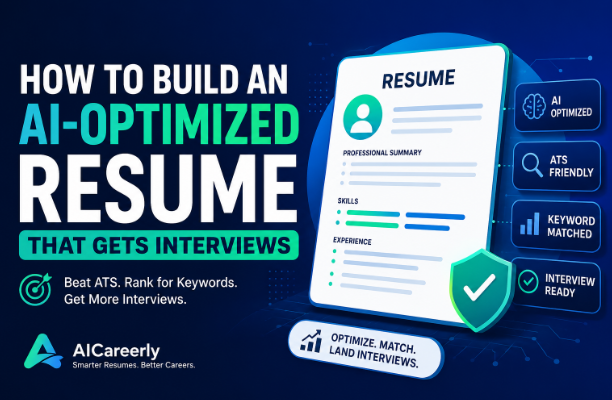
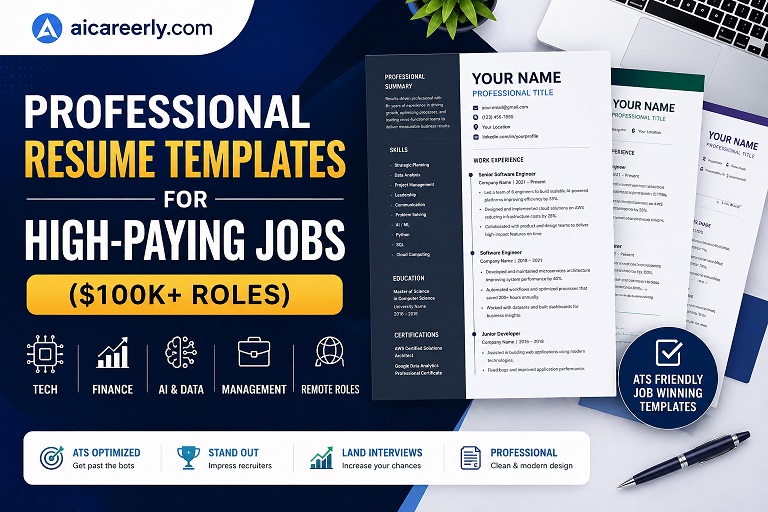
Step 6: Create an AI-Optimized Resume & Portfolio
Now that you have skills and projects, package them properly. Your resume should highlight:
- AI tools you’ve used
- Results you’ve achieved
- Projects you’ve completed
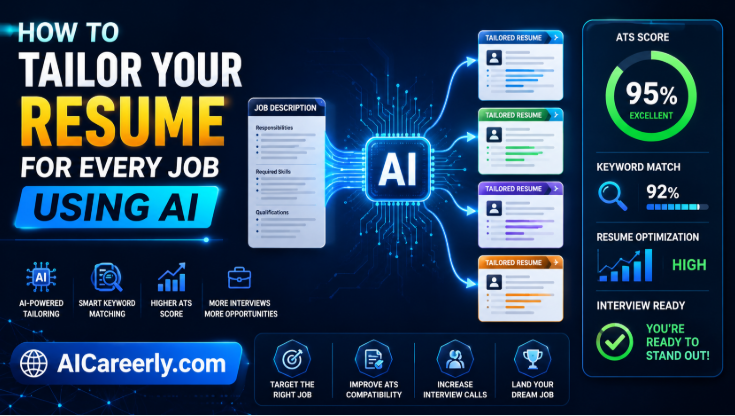
Use AI tools to improve your resume:
- Optimize keywords for ATS systems
- Rewrite bullet points for impact
- Tailor applications to each job
Your portfolio can be simple:
- A personal website
- A Notion page
- A Google Drive folder
The goal is clarity, not complexity.
.
Step 7: Apply Smart (Not Hard)
Most job seekers apply to hundreds of jobs blindly. That strategy doesn’t work anymore.
Instead:
- Target AI-related roles specifically
- Customize each application
- Use AI to research companies
- Practice AI-assisted interview prep
Focus on roles like:
- AI content specialist
- Junior data analyst
- AI operations assistant
- Prompt engineer
Quality beats quantity.
.
Step 8: Stay Updated (AI Evolves Fast)
AI in 2026 changes rapidly. New tools, new roles, new opportunities.
Stay updated by:
- Following AI newsletters
- Watching industry updates
- Testing new tools regularly
But don’t fall into the trap of “learning everything.” Stay focused on your career path.
.
Common Mistakes to Avoid
Let’s be clear about what not to do:
- Waiting to feel “ready” before starting
- Trying to learn coding before understanding AI basics
- Consuming endless tutorials without building projects
- Ignoring soft skills like communication
The biggest mistake? Treating AI like a subject instead of a tool for career growth.
.
Final Thoughts: Your AI Career Starts Now
Remember Daniel? He didn’t become an AI expert overnight.
He simply:
- Learned the basics
- Focused on practical tools
- Built small projects
- Applied strategically
That’s all it takes. AI is not replacing job seekers. It’s replacing job seekers who don’t adapt. If you start today, even one hour per day, you can become job-ready in a few months. And in a world where competition is increasing… That small decision could change your entire career.
.
Your Next Step
Don’t overthink this. Start with one action today:
- Open an AI tool
- Learn one skill
- Build one small project
Momentum beats perfection every time.