A story every job seeker will recognize
In January 2026, Daniel had already applied to 87 jobs. He had a solid degree, a few internships, and a resume he believed was strong. Yet every morning followed the same routine: open inbox, refresh, and hope. Most days brought silence. On others, rejection emails arrived.
One evening, he tried something different. He opened ChatGPT and asked:
“What am I doing wrong with my job applications?”
Within minutes, his resume was rewritten, his cover letter personalized, and he had a list of interview questions tailored to the role. Two weeks later, he had interviews. One month later, he had a job offer.
What changed wasn’t his experience. It was how he used AI.
.
Why AI Is the Ultimate Job Search Advantage in 2026
The job market is now driven by automation. Recruiters use AI tools to scan resumes, shortlist candidates, and filter applications. This means one thing:
To compete, you need to use the same level of technology.
Tools like Jasper AI and Copy.ai allow job seekers to create high-quality applications faster and more effectively.
Instead of applying blindly, you can now approach your job search with precision.
.
Step 1: Use AI to Identify the Right Jobs Faster
Before applying, you need clarity. AI tools such as ChatGPT and Perplexity AI can analyze your skills and suggest:
- High-demand roles
- Career paths
- Salary expectations
- Skill gaps
This helps you avoid wasting time on roles that don’t fit your profile.
.
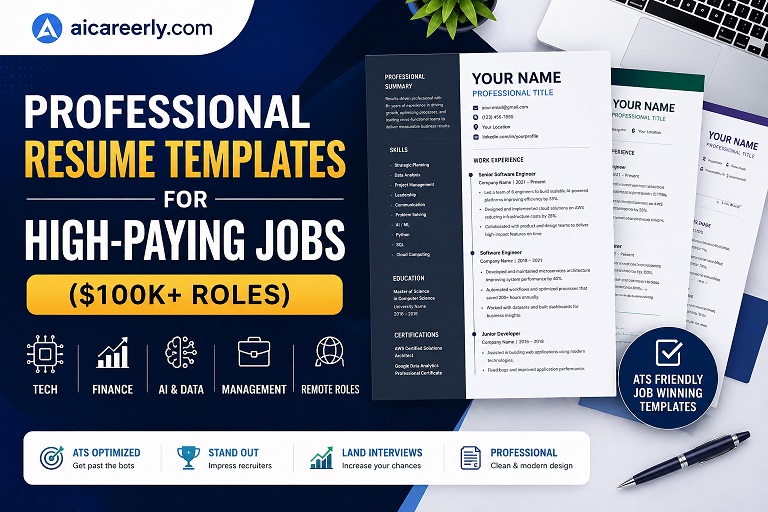
Step 2: Create an AI-Optimized Resume That Gets Interviews
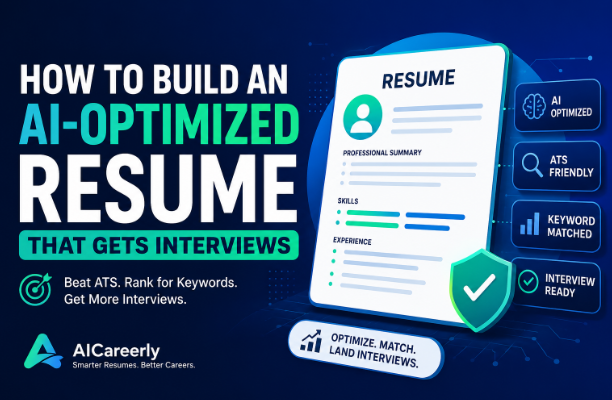
Your resume must pass ATS filters and impress recruiters. AI resume builders like Rezi and Kickresume are designed for this purpose.
They help you:
- Optimize keywords for ATS systems
- Improve bullet points with measurable results
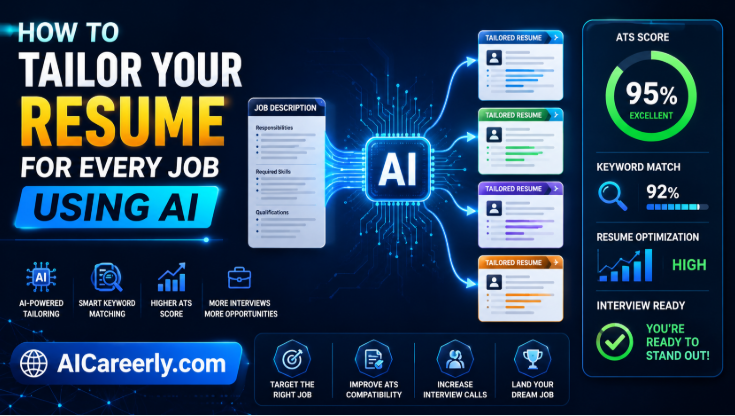
- Tailor resumes to specific job descriptions
Instead of listing tasks, these tools help you present impact, something recruiters prioritize.
.
Step 3: Write High-Converting Cover Letters with AI
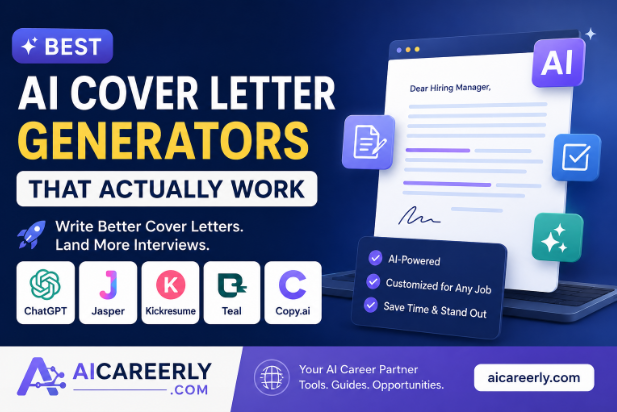
Writing a strong cover letter for every job can be exhausting. AI tools like Copy.ai and Jasper AI generate personalized drafts in seconds.
They analyze:
- Job descriptions
- Company tone
- Your experience
But the best results come when you refine the output with your own voice. That balance between automation and authenticity leads to higher response rates.
.
Step 4: Find Hidden Job Opportunities Using AI
Many of the best opportunities are never publicly listed. AI-powered platforms like Apollo.io and Clay help you:
- Discover hiring managers
- Identify companies actively recruiting
- Build targeted outreach lists
You can then combine this with AI-generated outreach messages to connect directly with decision-makers.
.
Step 5: Use AI for Interview Preparation (Your Personal Coach)
Interviews are where opportunities are won or lost. AI tools like Interview Warmup and Final Round AI simulate realistic interview environments.
They help you:
- Practice role-specific questions
- Improve answer structure
- Receive real-time feedback
With consistent practice, your responses become clearer, more confident, and more persuasive.
.
Step 6: Optimize Your LinkedIn Profile with AI
Your LinkedIn profile is often your first impression.
AI tools like Teal and Resume Worded help you:
- Craft a compelling headline
- Improve your summary
- Highlight achievements effectively
A strong profile increases visibility and attracts recruiters organically.
.
Step 7: Automate Your Job Search and Save Time
Job searching involves many repetitive tasks that can slow you down.
Platforms like Teal and Huntr help automate:
- Application tracking
- Job organization
- Follow-up reminders
This keeps your process structured and efficient, allowing you to focus on high-impact activities.
.
Common Mistakes to Avoid When Using AI
AI can dramatically speed up your job search, but using it the wrong way can actually reduce your chances of getting hired.
One of the most common mistakes is relying on AI-generated content without editing it. Recruiters can quickly spot generic, repetitive language, and it often signals a lack of effort. AI should give you a strong starting point, but your personal voice, achievements, and intent must still come through clearly.
Another major issue is over-automation. While it’s tempting to use AI to apply to dozens of jobs instantly, this often leads to low-quality, untargeted applications. In today’s competitive market, quality always beats quantity. A few well-tailored applications will outperform dozens of generic ones.
Job seekers also make the mistake of ignoring personalization. Even with AI, every resume, cover letter, and outreach message should feel specific to the role and company. Recruiters are looking for candidates who understand their needs, not just those who can generate content quickly.
Finally, some candidates treat AI as a replacement for thinking rather than a support tool. The most successful job seekers use AI to enhance their strategy, not replace their judgment. They refine outputs, add context, and ensure everything aligns with their goals.
The bottom line:
AI gives you speed, but it’s your insight and personalization that get you hired.
.
What Makes AI-Powered Job Seekers More Successful
The difference isn’t effort, it’s approach. Traditional job seekers often rely on volume. They send out as many applications as possible, hoping something sticks. But in a competitive, AI-driven hiring landscape, this strategy is becoming less effective.
AI-powered job seekers take a different path. They focus on strategy over speed. Instead of applying blindly, they carefully target roles that align with their skills and goals. They use AI to tailor each resume and cover letter, ensuring every application speaks directly to the employer’s needs. They also prepare more effectively, using AI to simulate interviews, refine their answers, and build confidence. This level of precision changes everything.
Rather than being one of hundreds of generic applicants, they position themselves as highly relevant candidates. Recruiters notice the difference, and respond faster.
The result?
More interview invitations, stronger performance during the hiring process, and ultimately, faster job offers. In a world where AI is reshaping how companies hire, the candidates who know how to use it strategically are the ones who stand out.
.
Conclusion: The Smart Way to Get Hired in 2026
Getting a job faster is no longer about applying to more positions. It’s about applying smarter. AI tools like ChatGPT, Rezi, and Teal, give you a competitive edge at every stage. If used correctly, they don’t just save time, they dramatically increase your chances of getting hired. So before sending your next application, ask yourself:
Am I using AI – or am I being outperformed by someone who is?