At 2:11 AM, Arjun stared at his screen, refreshing his inbox for the fifth time in ten minutes. Three months earlier, he had completed an advanced machine learning certification. He had built projects, contributed to GitHub, even optimized his résumé using AI tools. Yet every application ended the same way: “We regret to inform you…”
Then something changed. Instead of applying blindly, he shifted strategy. He targeted countries actively seeking AI professionals, places where governments were funding innovation, companies were desperate for talent, and visa systems were designed to attract people exactly like him.
Within six weeks, he had three interview requests. Within three months, he had a job offer, with visa sponsorship, relocation support, and a salary triple what he expected. This is not luck. It’s positioning. And in 2026, where you apply matters just as much as what you know.
.
Why Countries Are Competing for AI Talent in 2026
Artificial Intelligence is no longer just a tech trend, it’s economic infrastructure. Governments now treat AI talent as a strategic resource, similar to oil or rare minerals. According to reports from organizations like the OECD and World Economic Forum, the global shortage of AI professionals continues to widen, especially in:
- Machine learning engineering
- AI research
- Data science
- AI infrastructure (MLOps, cloud AI systems)
This shortage has triggered aggressive policies:
- Fast-track visas
- Tax incentives
- Relocation bonuses
- Government-funded AI hubs
For job seekers, this creates a rare advantage: you are in demand globally, not just locally.
.
What Makes a Country “AI Talent Friendly”?
Before diving into the list, understand the evaluation criteria. The best countries in 2026 combine:
a. High Salary Potential
AI roles often exceed national averages by 2–4x.
b. Visa Accessibility
Countries offering sponsorship, skilled worker visas, or tech-specific immigration programs.
c. Market Demand
Active hiring across startups, enterprises, and research institutions.
d. Ecosystem Strength
Presence of AI labs, funding, and innovation infrastructure.
.
1. United States — Still the Global AI Powerhouse
The United States remains the epicenter of AI innovation. Companies like OpenAI, Google DeepMind (US operations), Meta, and Microsoft continue to dominate global AI research and deployment.
Salary Range (2026)
- $120,000 – $220,000+ per year
- Top AI researchers: $300,000+
Visa Options
- H-1B (highly competitive but common)
- O-1 visa (for highly skilled professionals)
- Employer-sponsored green cards
Why It Stands Out
The U.S. offers unmatched access to:
- Cutting-edge AI research
- Venture capital ecosystems
- High-impact projects
However, visa competition is intense. Strategic positioning (portfolio + niche specialization) is critical.
.
2. Canada — The Easiest Entry Point for AI Professionals
Canada has quietly become one of the most accessible countries for AI talent. Cities like Toronto, Montreal, and Vancouver are now global AI hubs.
Salary Range
- CAD 90,000 – CAD 160,000
Visa Pathways
- Express Entry (points-based system)
- Global Talent Stream (fast-track work permits)
- Provincial Nominee Programs
Why Job Seekers Prefer Canada
Canada balances opportunity with accessibility:
- Faster visa processing
- Lower barriers than the U.S.
- Strong AI research community
Major institutions like the Vector Institute and Mila (Montreal AI Institute) drive hiring demand.
.
3. Germany — Europe’s Industrial AI Leader
Germany’s AI demand is driven by industry, not just tech companies.
Think:
- Automotive AI
- Robotics
- Manufacturing optimization
Salary Range
- €70,000 – €120,000
Visa Options
- EU Blue Card
- Skilled Worker Visa
Key Advantage
Germany faces a severe talent shortage, especially in applied AI roles. Companies actively sponsor international candidates, particularly those with engineering + AI hybrid skills.
.
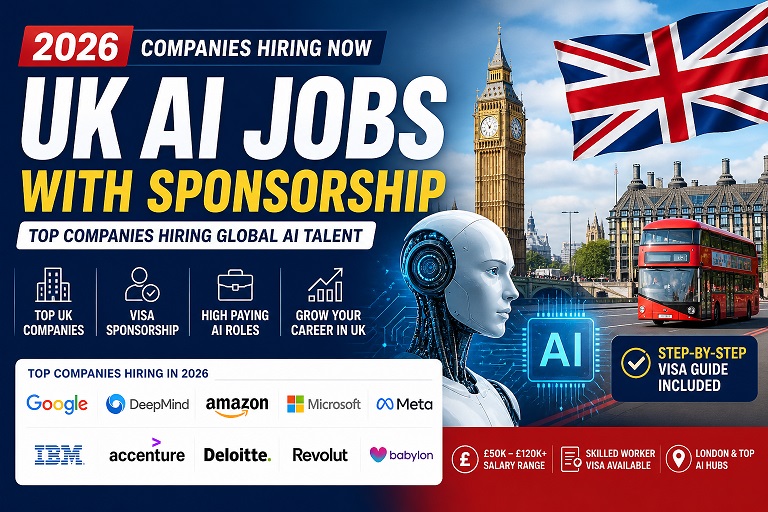
4. United Kingdom — Fast-Growing AI Hiring Market
Despite post-Brexit adjustments, the UK has doubled down on AI investment. London remains a global fintech and AI hub.
Salary Range
- £65,000 – £130,000
Visa Options
- Skilled Worker Visa
- Global Talent Visa (highly attractive for AI experts)
Why It’s Attractive
The UK’s Global Talent Visa is one of the most flexible pathways for experienced professionals.
You don’t always need a job offer, just proof of expertise.
.
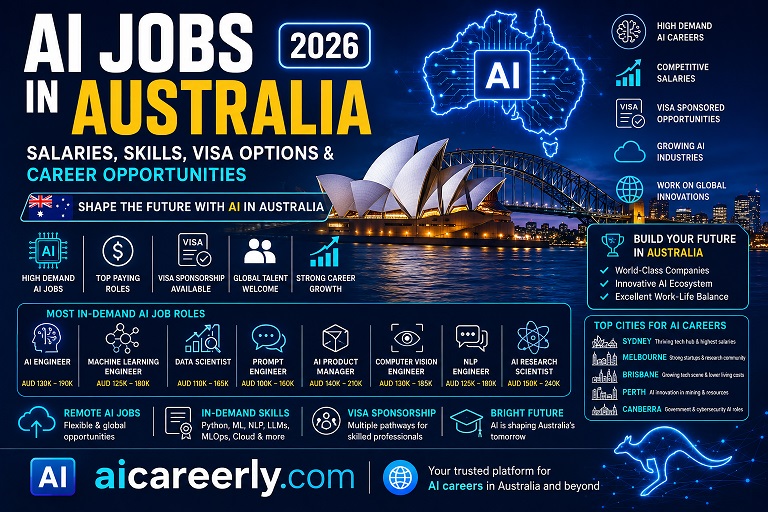
5. Australia — High Salaries + Quality of Life
Australia is aggressively importing tech talent to fill workforce gaps.
Salary Range
- AUD 100,000 – AUD 180,000
Visa Pathways
- Skilled Independent Visa
- Employer-sponsored visas
Market Insight
AI demand is rising across:
- Healthcare
- Mining technology
- Fintech
Less competition than the U.S. or UK makes it a strategic option.
.
6. United Arab Emirates — Tax-Free AI Careers
The UAE, especially Dubai and Abu Dhabi, is investing billions into AI.
Salary Range
- $80,000 – $150,000 (tax-free)
Visa Options
- Golden Visa (long-term residency)
- Employer sponsorship
Why It’s Unique
- Zero income tax
- Rapidly growing AI ecosystem
- Government-backed AI initiatives
Programs like the UAE AI Strategy 2031 are fueling long-term demand.
.
7. Singapore — Asia’s AI Innovation Hub
Singapore is positioning itself as Asia’s AI command center.
Salary Range
- SGD 90,000 – SGD 180,000
Visa Options
- Employment Pass
- Tech.Pass (for elite tech talent)
Strengths
- Strategic location in Asia
- Strong government support
- High concentration of tech companies
Competition is high, but so are rewards.
.
8. Netherlands — Europe’s Startup AI Gateway
The Netherlands offers a strong combination of startup culture and international accessibility.
Salary Range
- €65,000 – €110,000
Visa Options
- Highly Skilled Migrant Visa
- Startup Visa
Why It Works
- English-friendly work environment
- Growing AI startup ecosystem
- Access to EU-wide opportunities
.
9. Sweden — AI + Innovation + Work-Life Balance
Sweden focuses on ethical AI and sustainable innovation.
Salary Range
- €60,000 – €100,000
Visa Options
- Work Permit for Skilled Workers
Unique Edge
Sweden offers:
- Strong social benefits
- Innovation-driven companies
- Balanced work culture
.
10. India (Remote + Global Roles) — The Outsourcing AI Engine
India is not just a talent supplier—it’s becoming a global AI execution hub.
Salary Range
- $20,000 – $60,000 (local roles)
- $60,000+ (remote international roles)
Why It Matters
Many global companies now hire AI professionals remotely from India.
This means:
- You can access global salaries without relocation
- Visa barriers are eliminated
.
Key Trends Defining AI Jobs in 2026
Understanding trends gives you a strategic edge.
1. Shift Toward Applied AI
Companies prefer professionals who can build and deploy, not just theorize.
2. Rise of AI + Domain Expertise
Hybrid skills outperform pure AI knowledge:
- AI + Healthcare
- AI + Finance
- AI + Cybersecurity
3. Remote Work Expansion
Cross-border hiring is increasing, especially for AI roles.
.
How to Position Yourself for Visa-Sponsored AI Jobs
Most candidates fail not because they lack skills, but because they lack positioning.
Focus on These Areas:
a. Build a Strong Portfolio
Projects should demonstrate:
- Real-world problem solving
- End-to-end pipelines
- Deployment (not just notebooks)
b. Optimize for Global Hiring
Use platforms like:
- Wellfound (AngelList Talent)
- Indeed Global
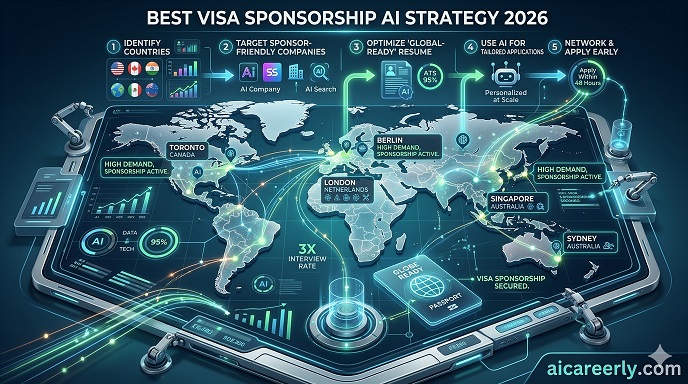
c. Target the Right Countries
Don’t apply randomly. Focus on countries actively sponsoring visas.
d. Specialize
Generalists struggle. Specialists get hired.
.
Final Thought: Opportunity Is Geographic
Arjun didn’t become more skilled in three months. He became more strategic. In 2026, AI talent is one of the most sought-after assets in the world, but opportunity is unevenly distributed. Some countries are saturated. Others are hungry. If you align your applications with demand, optimize for visa pathways, and present yourself as a problem-solver and not just a job seeker, you dramatically increase your odds.
The question is no longer: “Am I qualified?” It’s: “Am I applying where I’m wanted?”
.
Frequently Asked Questions (FAQs)
1. Which country is easiest to get AI jobs with visa sponsorship in 2026?
Canada is widely considered the easiest due to its streamlined immigration pathways like Express Entry and the Global Talent Stream. Germany and Australia also offer relatively accessible visa options compared to more competitive systems like the United States.
2. What is the highest-paying country for AI professionals?
The United States offers the highest salaries, with AI engineers earning between $120,000 and $220,000+, and top researchers exceeding $300,000 annually. However, tax-free income in the UAE can make net earnings highly competitive.
3. Do I need a degree to get an AI job abroad?
While a degree helps, it is not always mandatory. Many employers prioritize practical skills, real-world projects, and a strong portfolio over formal education, especially in startup ecosystems and remote roles.
4. Which visa is best for AI professionals?
It depends on the country. Popular options include the Global Talent Visa (UK), EU Blue Card (Germany), H-1B (USA), and Global Talent Stream (Canada). These are specifically designed for highly skilled professionals.
5. Can I get an AI job with visa sponsorship without experience?
It is possible but challenging. Entry-level candidates improve their chances by building strong portfolios, contributing to open-source projects, and targeting countries with talent shortages like Germany or Canada.
6. Are remote AI jobs a good alternative to relocation?
Yes. Many companies now hire globally, allowing professionals to earn international salaries without moving. This is especially common for candidates based in countries like India.
7. Which AI roles are most in demand globally in 2026?
Machine learning engineers, AI engineers, data scientists, and MLOps specialists are among the most in-demand roles. Applied AI roles that involve deployment and real-world systems are particularly valuable.
8. How can I increase my chances of getting sponsored?
Focus on specialization, build a portfolio with deployed projects, tailor your applications to specific countries, and apply through global job platforms. Demonstrating real impact is key.
9. Is English required to work in AI jobs abroad?
In most countries, especially the US, UK, Canada, and Australia, English is essential. In countries like Germany or the Netherlands, many tech roles are English-friendly, but learning the local language can be an advantage.
10. Which countries are investing the most in AI talent right now?
The United States, Canada, United Kingdom, Germany, UAE, and Singapore are leading in AI investment, offering strong demand, government support, and attractive visa programs for skilled professionals.